New Diffusion-limited aggregation algorithm
This is a pretty old project I did, probably around a year ago. At the time I was trying to create a faster DLA algirthm. My reason towards making this was for height map generation due to the mountain like strcutures DLA can create.
A traditional dla algorithm will have two things, seeds and particles. The seeds are the starting point of where particles land. The particles are spawned in at a random location and will move around randomly, stopping only once they hit a seed or another stopped particle. While this alogithm is slow at the start, it becomes fast near the end due to less room for the particles to move.
Here is how DLA would look using this algorithm:
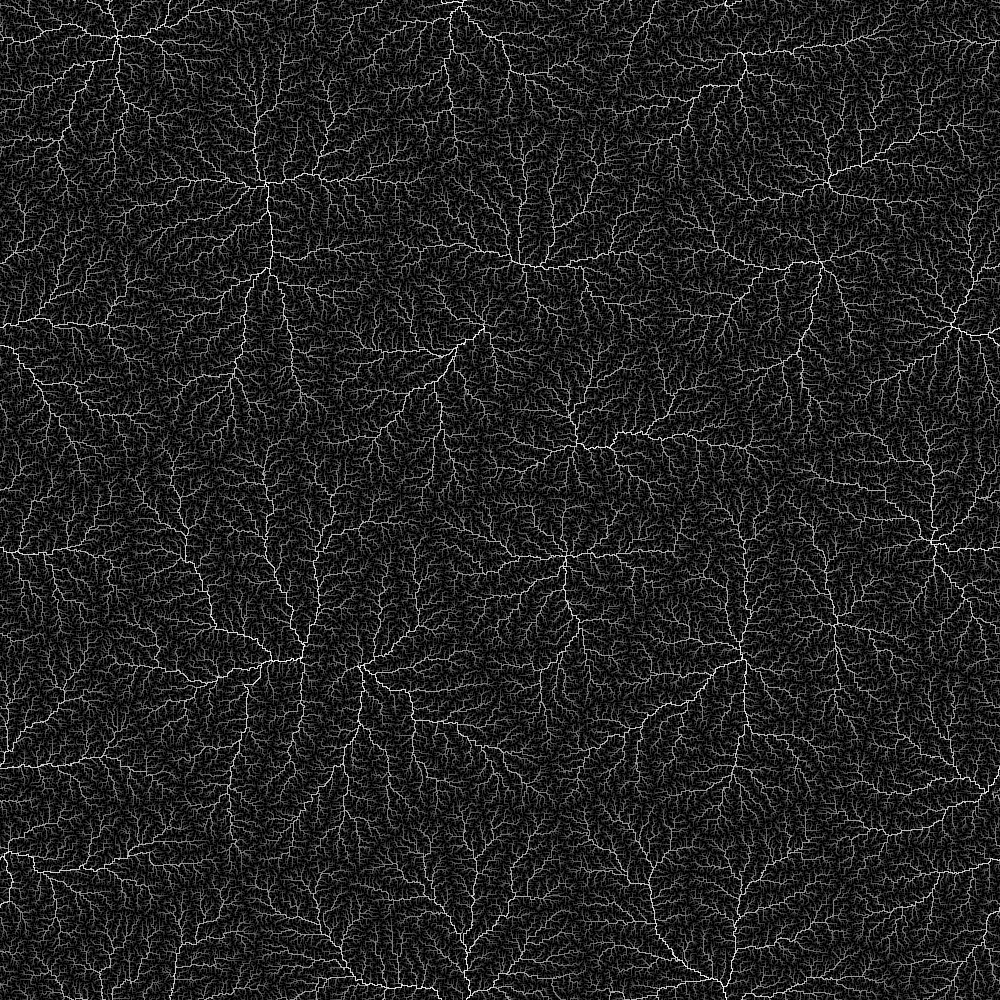
My approach was a little different, instead of making the particles traverse all that ground, which takes many iterations. Why not just place particles randomly on the seeds?
My algorithm also has seeds and particles. The seeds which are also just stopped particles are placed randomly around the make and added to an array of alive particles. Then we randomly choose one of these stopped particles and place a new particle facing in a random direction. This newly placed particle is added to the array of alive particles. Once a particle is covered on all 8 pixels around it, the pixel is removed from the list of alive particles and added to the list of dead particles, where it will stay till the end of the simulation.
Here is how DLA would look using my algorithm:
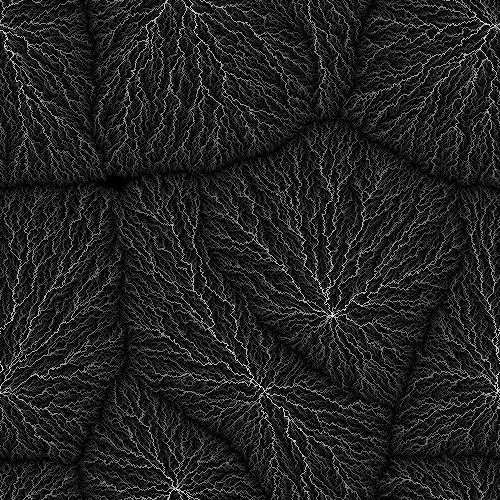
Supringly, this algorithm worked! It does look a little unatural compared to the traditional method but it doesn't look half bad. My algorithm should be faster but the only downside would be data handling which might make this method slow if not properly done.
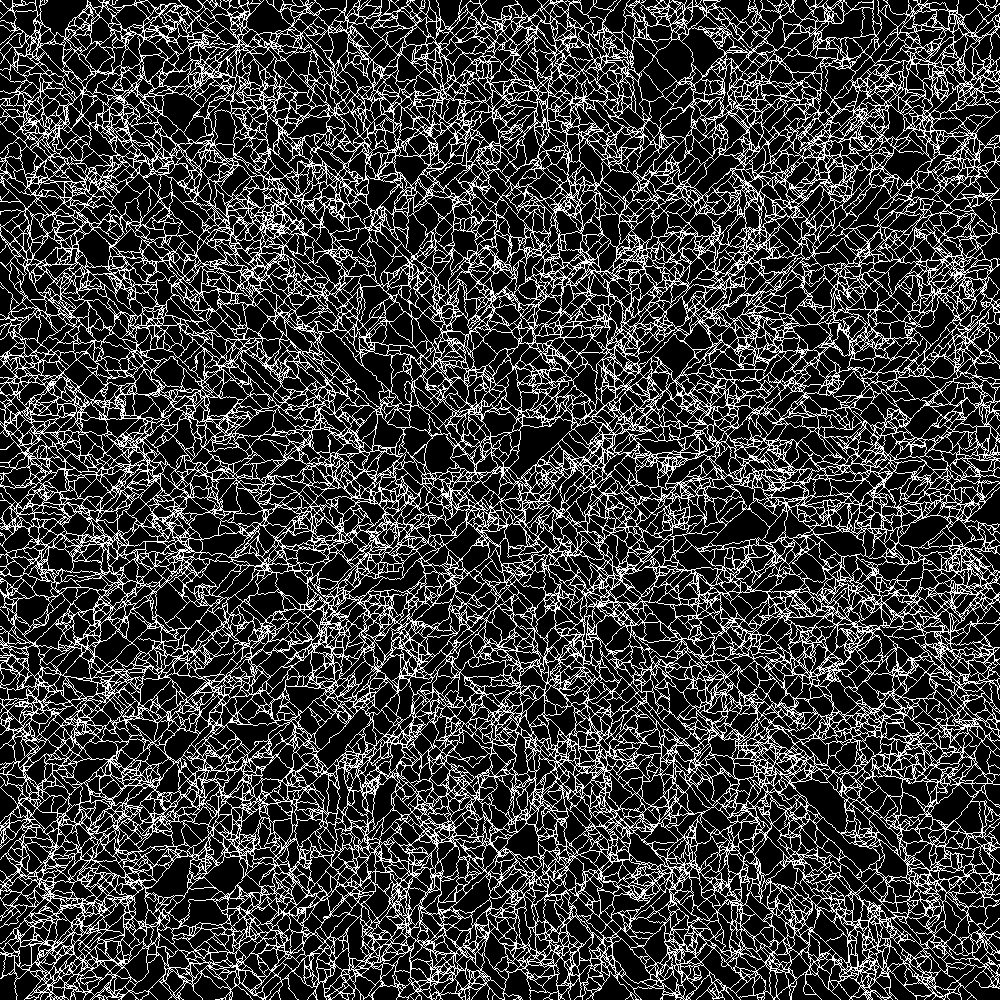
While this one worked, I do have a failed one. Though this one is the fastest, it doesn't look that good and looks extremely unatural. This algorithm chooses a random point and draws a line in a certain direction, with some randomness. While it certainly doesn't look like DLA, it still looks pretty cool.
Here is the failed algorithm with randomness:
here is the failed algorithm without randomness:
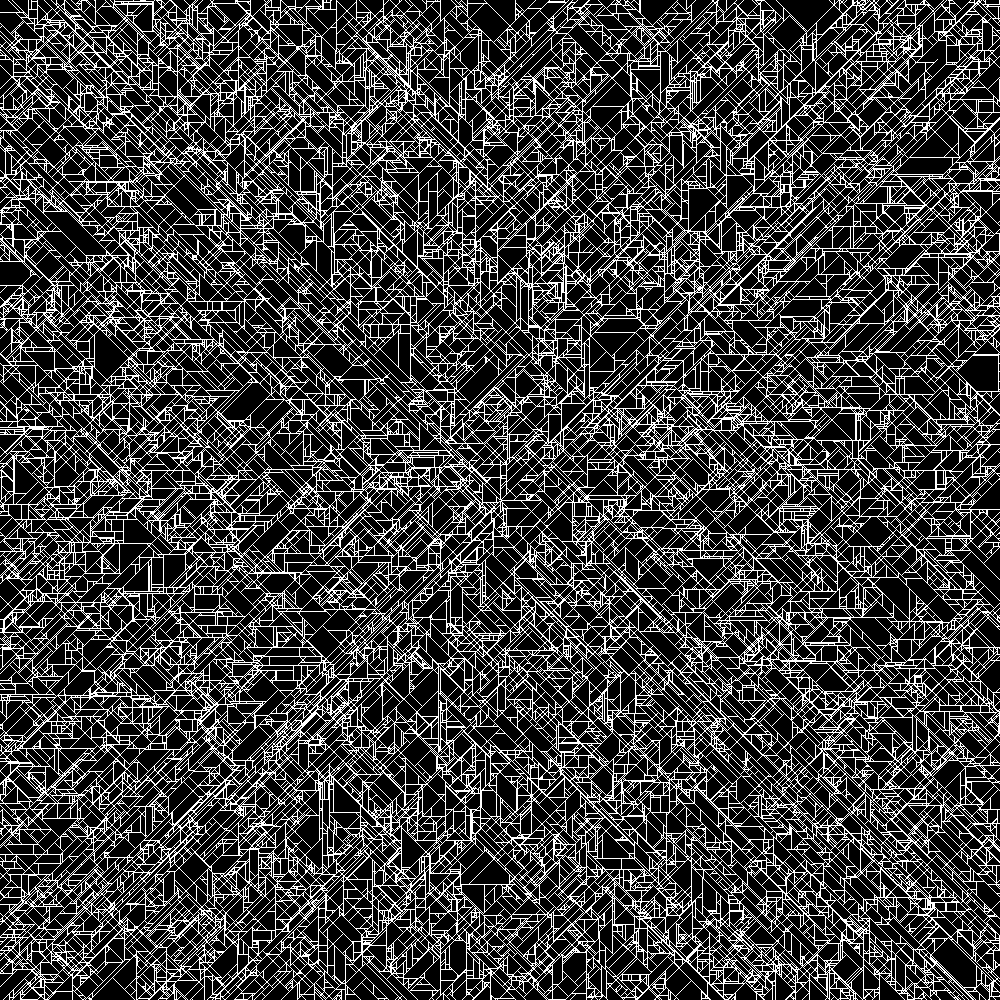
They look pretty unique and could be used for other applications.
Note: If you would like to see the source code of my algorithms, feel free to email me at the email below.